

What Businesses Need to Know to Stay Legal
Artificial intelligence (AI) tools are reshaping content creation. It is now easier for businesses to produce images and videos for use on websites, social media, and other digital outlets. All this is possible without the traditional hurdles of expensive photoshoots, special design skills, or complex video production. However, as exciting as it is, business owners must pose and confront the question of whether these AI-generated images and videos are legally safe for commercial use from a copyright perspective.
Understanding AI-Generated Content and Copyright
AI-generated content is created by training algorithms with massive datasets of existing images, videos, and text. The AI models then analyze patterns from the training data to generate new content. However, issues arise concerning the ownership of the generated content. Without clear legal guidelines, the ownership of AI-generated images and videos remains a gray area that leaves businesses and individuals vulnerable to potential disputes.
Most jurisdictions, including the United States and the EU, deny copyright protection to work purely generated by AI as it lacks human authorship. The U.S. Copyright Office stated that only content with human creative input can be eligible for protection. In its January 2025 report, the U.S. Copyright Office also states that copyrightability must be assessed on a case-by-case basis.
Laws differ globally. For instance, while the U.S. copyright office has rejected applications for AI-generated content, the U.K. allows copyright when a significant human intellectual effort guides the output.
Copyright laws do agree that a business risks infringement claims if AI-generated content resembles existing copyrighted material. So far, there has been a surge in the number of copyright lawsuits because of generative AI. A good example is Getty Images sued Stability AI, alleging its Stable Diffusion model copied millions of Getty’s photos without permission.
Generally, despite the efforts made to develop copyright laws for AI output, unlike content created by humans, there still lacks a clear legal framework for ownership and usage rights. For one, laws and legal frameworks struggle to keep up with the speed at which AI technology advances. This means that currently, no definitive, globally recognized legal standards firmly establish the copyright status of AI creations. For a business, although using AI visuals is not inherently legal or forbidden, it is best to be cautious and take due diligence.
Best Practices Every Business Owner Must Keep in Mind
- Read the terms of service (TOS)
Every AI image and video generator has its own unique terms of service. Therefore, it is crucial to examine these terms carefully. Specifically, look for clauses that address issues such as commercial usage, ownership, indemnification, and TOS change policies. - Understand model releases
This especially applies where the AI-generated images may include recognizable human faces. In the same way that there are rights of publicity and privacy in traditional photography of human models, consider if this also applies to AI-generated faces. - Documentation
It is crucial to keep a record of each generated AI visual asset. Keep information such as AI platform used, prompts used, date of creation, TOS at the time of creation, and modifications made to the generated visual. - Consider using well-established platforms.
Although there is no AI platform that offers a 100 percent guarantee of copyright safety, it is safer to lean toward well-established and respected AI generators. Also, platforms trained using licensed or public domain data should be considered. - Adopt the “human-in-the-loop” approach.
This involves edits such as text overlays, color adjustments, or storyboarding. AI-generated content can be used as a starting point or for inspiration, but it is modified and refined by human designers. This results in a blend of AI assistant and human creative input to potentially mitigate copyright concerns. - Seek expert legal counsel.
When dealing with content that is central to a business identity, such as branding or major marketing campaigns, it is critical to seek guidance from an attorney specializing in intellectual property law. - Stay informed
Copyright law in the age of AI is not static; it is actively evolving. It is important, therefore, to commit to staying informed about legal developments, court rulings, and evolving practices. Business content strategies and practices also should be adjusted as the legal landscape changes.
Embrace the Future of Visuals Responsibly and Legally
The transformative power of AI to generate stunning visuals is promising to revolutionize business marketing and communication. However, business owners must approach this technology with a balanced perspective. That is, embracing its potential while avoiding copyright infringement, ensuring ethical content creation, and effectively safeguarding intellectual property assets.




 The subscription economy, according to Forbes, is expected to reach $1.5 trillion in revenue for businesses. With the potential likely realized this year, it’s vital to understand how it is tracked – and more importantly, how it’s able to be tracked on a separate basis.
 As Benjamin Franklin said, there’s only two certainties in life: death and taxes. With the former, you don’t have much control over; however, the latter can be affected. That’s why we’re here to give you some tips and info about filing in our changing landscape.
 Identity theft is when someone steals your personal information and then uses it to commit fraud. They may access your Social Security or Medicare number, employee ID, utility, credit card or bank account numbers. Once the scammer has this information, he can conduct all kinds of crimes, such as withdraw assets from your accounts, open and close accounts in your name, take out loans or new lines of credit in your name, and even impersonate you if they get arrested – leaving you with a criminal record you may not even know about.
 Return on Ad Spend (ROAS) is one way to help advertising and marketing professionals and investors analyze how well promotions do (or don’t) produce sales. It helps advertisers develop data based on their campaigns’ revenue production (or lack thereof). Understanding how this metric is calculated and how to analyze ROAS is essential for businesses to monitor and increase their advertising performance.
 With a Roth IRA, the owner can make limited contributions each year. In 2025, the limit is $7,000; $8,000 if age 50 or older. Only people who earn less than $150,000 (single filers) or under $236,000 (married filing jointly) can make a full Roth IRA contribution. While contributions do not qualify for a tax deduction, earnings are not taxable once the account has been open for five years. Contributions, which were previously taxed as income, can be withdrawn at any time.
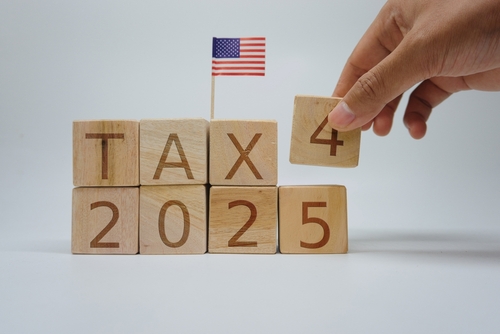 As 2025 unfolds, U.S. tax policy is poised for significant shifts, particularly with a new Republican administration under President Donald Trump. The year ahead will likely see a range of tax reforms, largely driven by the GOP’s objectives and campaign promises. In this article, we’ll explore the major tax policy trends, legislative developments, and administration changes that may shape U.S. tax law in 2025.
 With the number of Amazon Prime member subscribers growing from 58 million in 2016 to 180 million in 2024, according to Statista, there’s a sustained recurring subscription model that one of America’s most successful retailers has increased more than 200 percent in eight years. Whether it’s a large company such as Amazon or a solopreneur beginning their recurring subscription services, it’s important to first distinguish between overall bookings and recurring revenue; and then to illustrate how businesses can measure these two types of revenue.
 The rise of artificial intelligence (AI) is continuously transforming how businesses operate, offering opportunities for efficiency, innovation, and growth. However, in an increasingly competitive landscape, businesses seek solutions tailored to their specific industries. To meet this demand for more tailored tools, vertical AI agents are emerging as key to staying ahead in the age of specialization.
 Keeping tabs on what you spend isn’t hard. It just has to become a habit. But here’s the good news: Studies show that it only takes an average of 66 days to form a habit. A little over two months. With these easy ways to track your monthly expenses, you’ll be a regular money manager in no time.